Buying children's clothes online comes with one extra problem: the child isn't there. They can't try anything on, they often won't stand still to be measured, and within a few months they move up a size. A parent sees the label "6 years", thinks of their six-year-old who is tall for their age, and orders two sizes.
For a kidswear store, the way sizes are labelled matters more than in any other department. There are two main options: by age or by height.
Two systems, often mixed
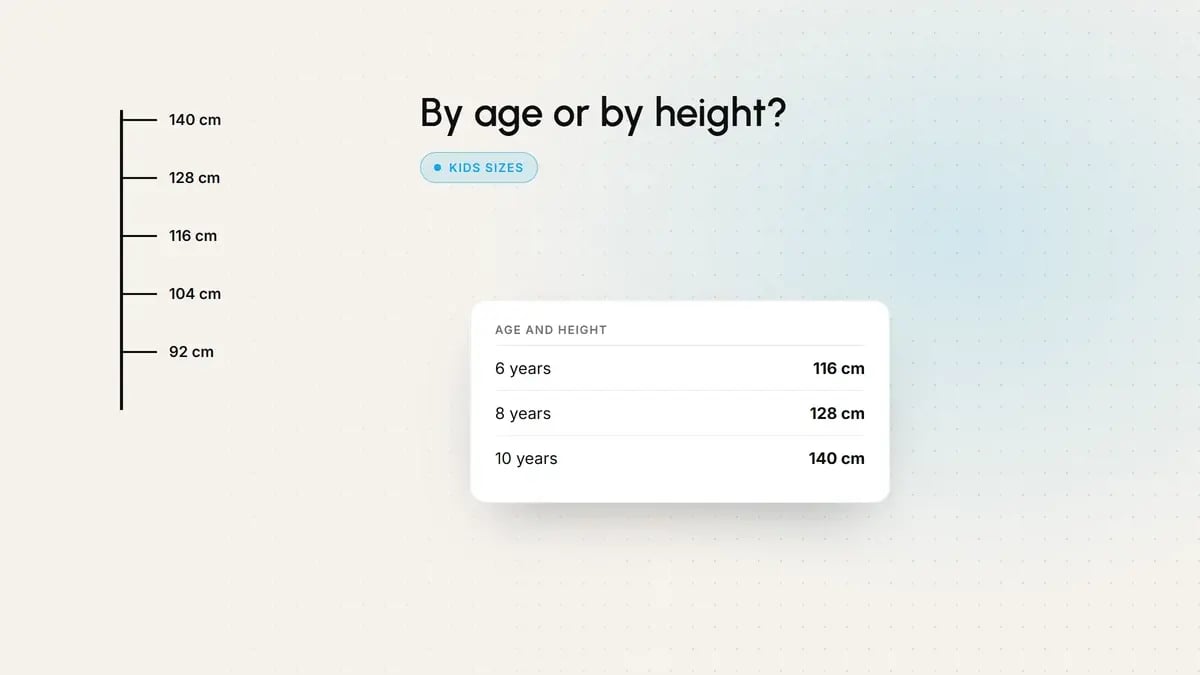
In Italy many brands label children's sizes by age: 4 years, 6 years, 8 years. In much of Europe the kids' size is the height in centimetres, such as 104, 116 or 128. The UK uses age ranges like "5-6 years", and the US has its own codes and numbers.
If you sell abroad you end up handling several systems at once, and shoppers find items labelled in years next to items labelled in centimetres on the same site. Unless the two are linked in a clear chart, the parent has to convert on their own.
Why age alone is not enough
Two children of the same age can be very different in height, and the gap grows with the years. Age is convenient, because parents know it without measuring anything, but it says little about build.
Height takes a minute to measure against a door, and it matches sleeve and trouser length much better. For close-fitting items such as bodysuits, leggings or swimwear, weight and chest also matter.
How to set up the size chart
- Height as the main reference, with a range for each size (for example 111 to 116 cm).
- Age as a guide, on the same row, for parents without a tape measure to hand.
- Chest, waist and weight for the categories that need them.
- A clear rule for in-between sizes: with children the larger size is almost always the better choice, because they grow.
- Conversions to the systems used in the countries you ship to.
If you are building the chart from scratch, start with our size chart generator. For country equivalents there is our guide to size conversion between IT, EU, UK and US.
How to measure a child at home
Many returns start with a measurement taken badly. A few instructions on the product page, or in a linked guide, are enough:
- Height without shoes, back against the wall, marking the top of the head with a book.
- Chest at the widest point, with a soft tape and without pulling it tight.
- Waist just above the belly button, with the child relaxed.
Our longer guide on how to take chest, waist and hip measurements works for older children too.
What to put on the product page
- Both labels, years and centimetres, in the size selector.
- A fit note when the item is made to last: "relaxed fit, works for the whole season".
- Garment measurements, especially length: for a parent it is the easiest figure to compare with something the child already wears.
- The size chart one click away, next to the size selector, not at the bottom of the page.
These are the same points as our product page checklist, applied to shoppers who are buying for someone else.
Going beyond the chart
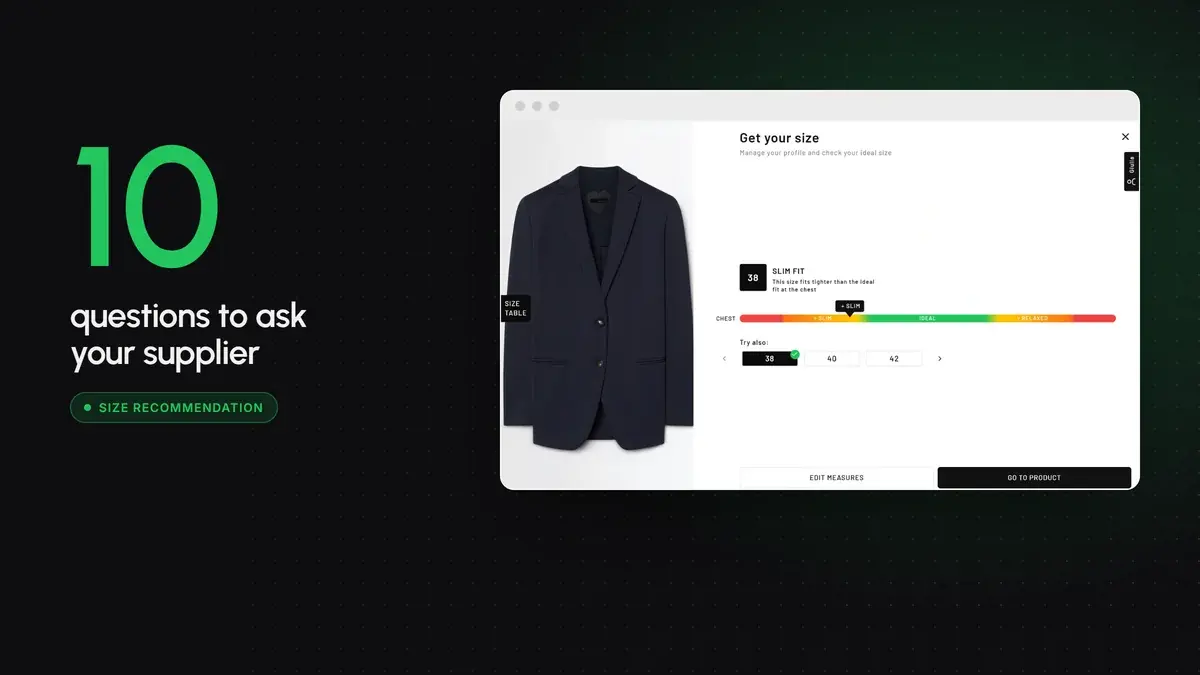
A well made chart answers most questions, but it still asks the parent to measure and compare. A size suggestion on the product page does the comparison for them. SizeFlow works from the brand's size chart or from each garment's own measurements and goes in with a snippet, with no backend changes. If you sell kidswear and want to see how it would work with your charts, book a 30-minute demo.
Read also: How to build a size chart · Why shoppers order two sizes · Size chart, size suggestion or body scan
Frequently asked questions
Should kids' sizes be labelled by age or by height?
Height is more reliable, because children of the same age can be very different in height. The clearest option is to show both: height as the reference and age as a guide.
If a child is between two sizes, which one is better?
Almost always the larger one, because children grow fast. Say so in the size chart and on the product page.
How do you measure a child's height at home?
Without shoes, back against the wall, marking the top of the head with a book.